
©Visit Éislek

Memorial Site Schumann's Eck

Where? Rue Grande-Duchesse Charlotte, L-9515 Wiltz

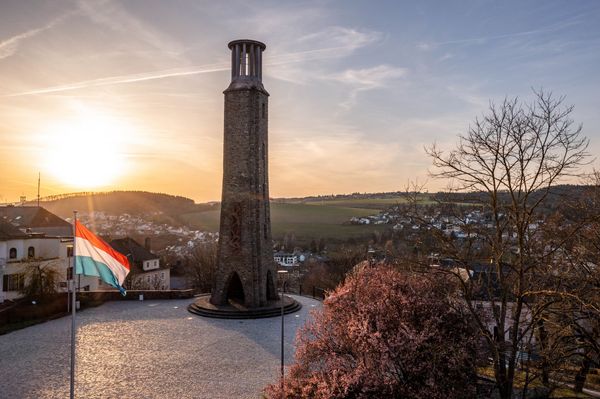
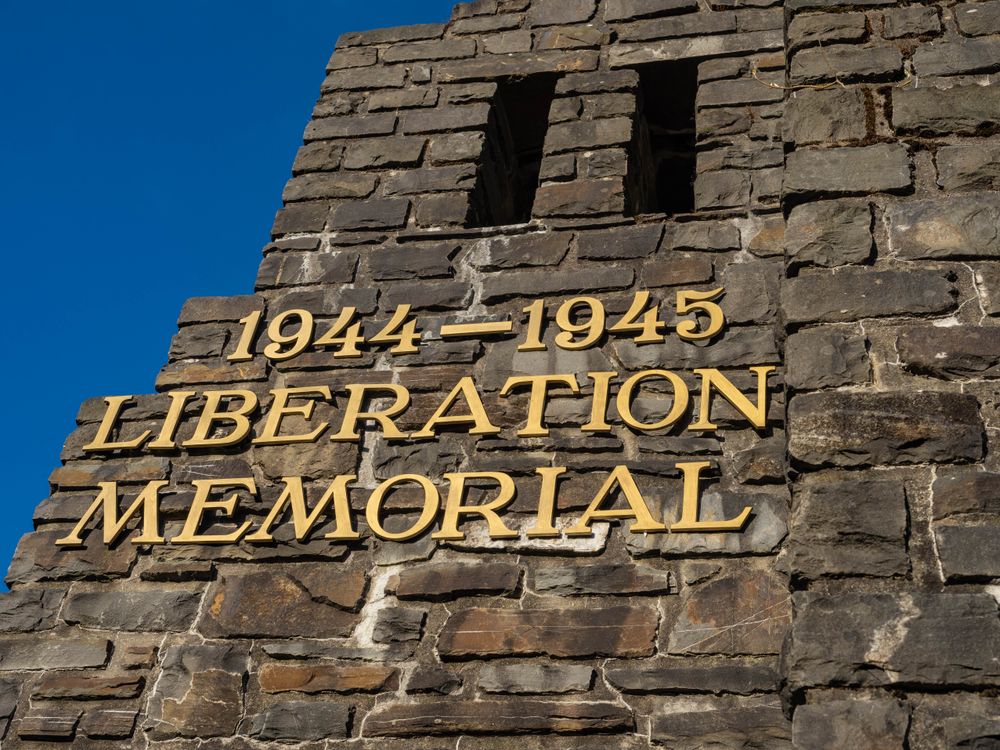
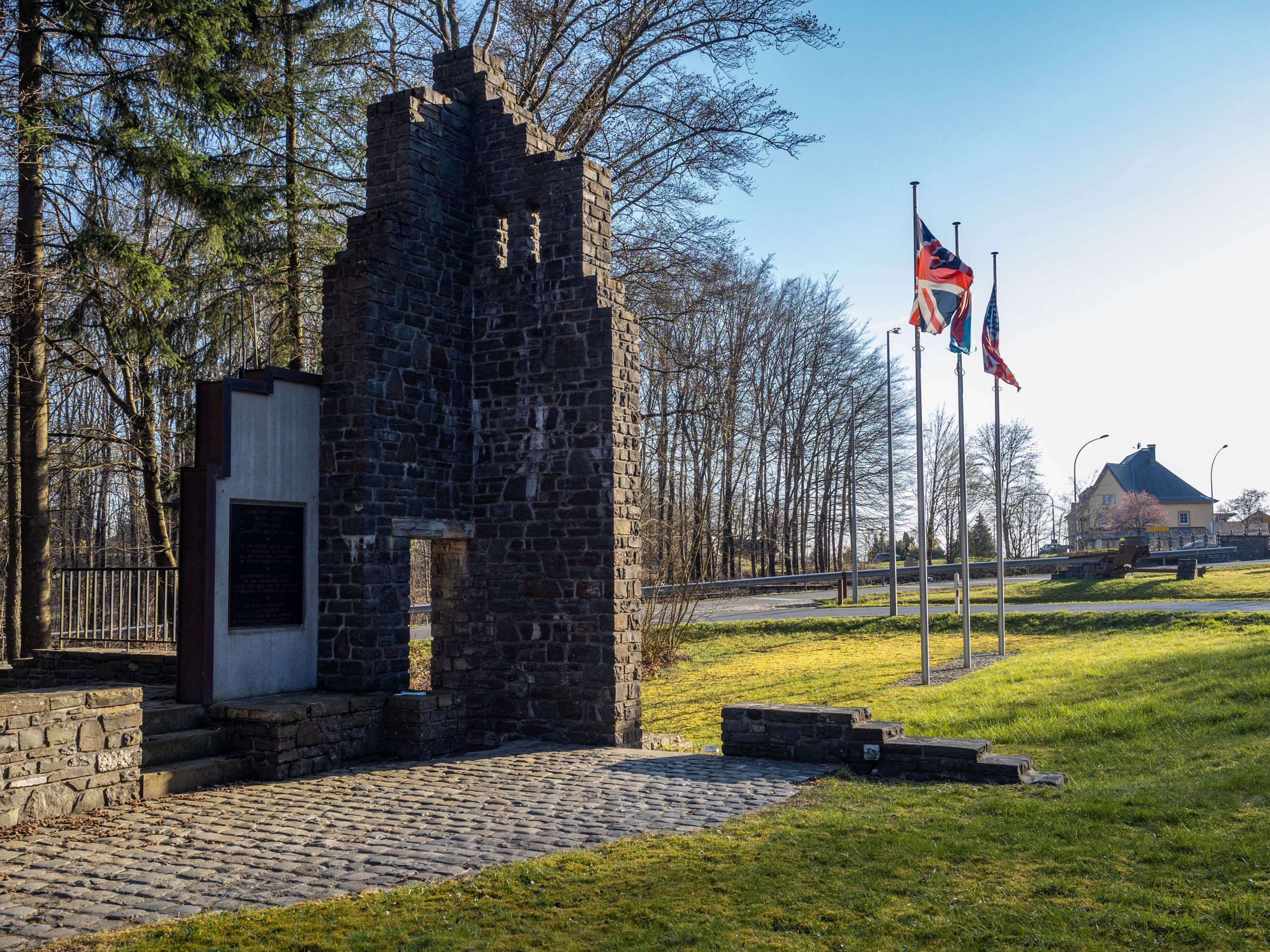
At the strategic road junction "Schumannseck", the most murderous position war raged for weeks during the Battle of the Bulge. Today, the 1944-1945 Liberation Memorial stands here in the spirit of reconciliation and understanding between peoples as a memorial against war in the world.

During the Battle of the Bulge, the "Schumann's Eck" was a strategically important road junction, which unfortunately became one of the cruellest battlefields in Luxembourg.

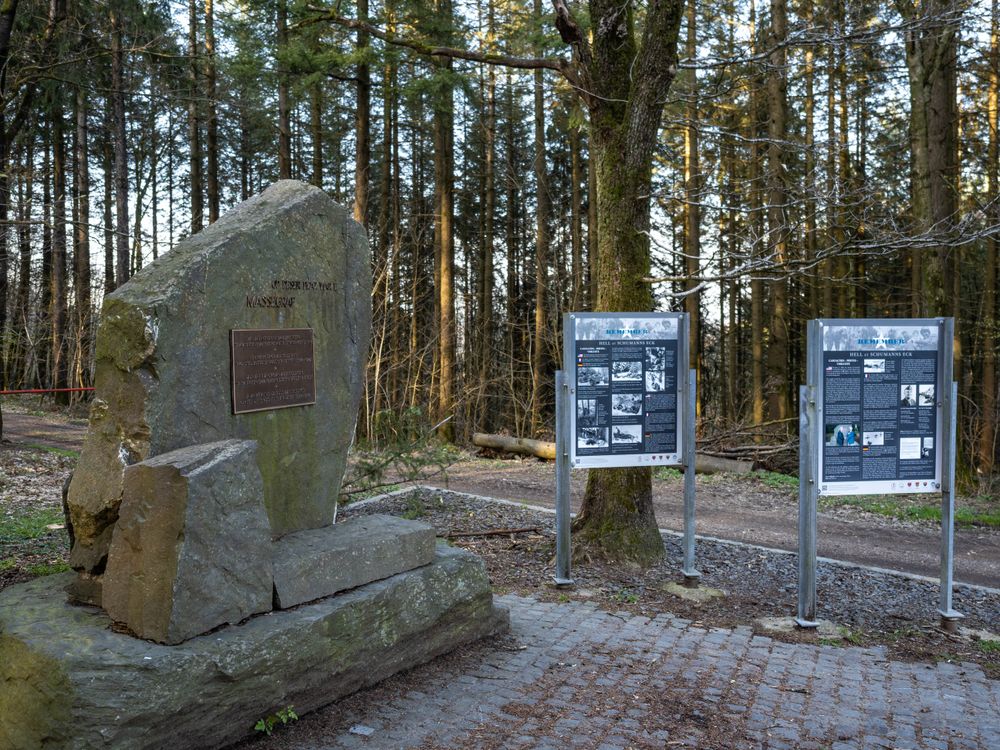
The "National Liberation Memorial" commemorates the thousands of soldiers that died in this battle. Another memorial called Massegraf (mass grave) is located on the spot where more than 160 German and some American soldiers were temporarily buried. 

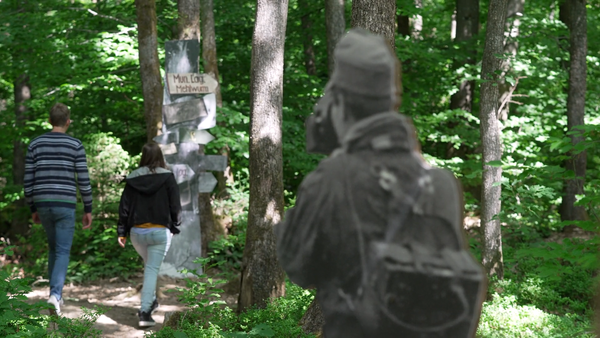
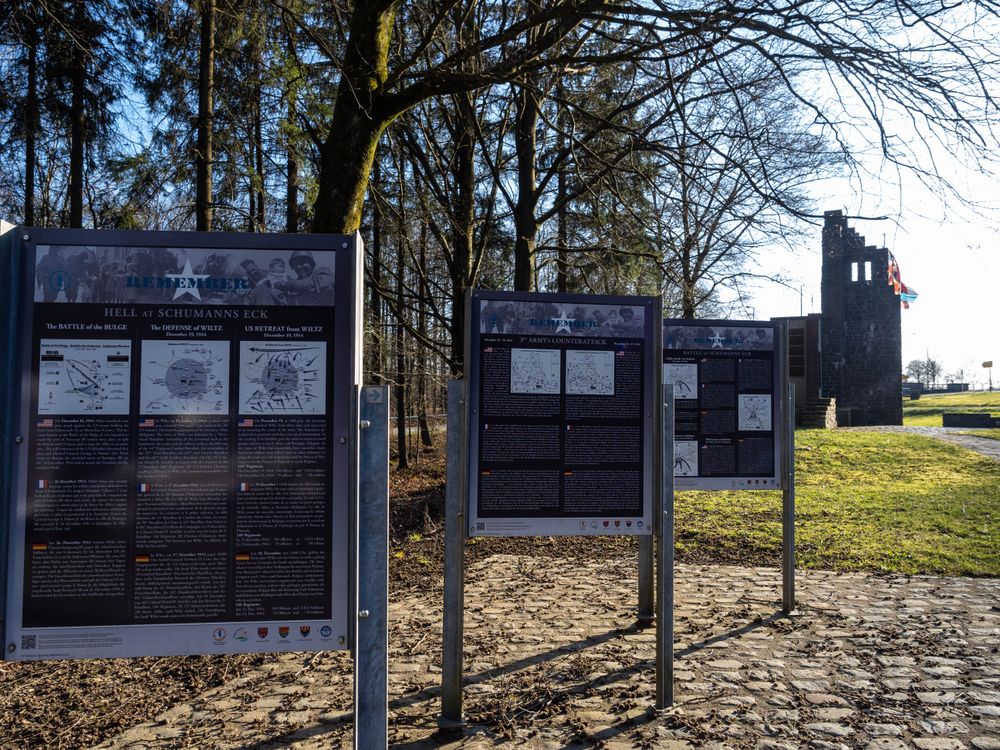
A memorial trail of 3 kilometres leads through the forest past old, partly reconstructed trenches. Life-size historical photos of American and German soldiers as well as Luxembourg civilians at various stations illustrate the events of that time.


Practical information

  • Accessible to all

Culture info

  • Visit possible (& visit information)
Opening hours

Contact

Address: Syndicat d'Initiative et du Tourisme Wiltz
35, Rue du Château
L-9516 Wiltz
Show on map

More sites

©Visit Éislek
free
with theLuxembourgPass
General Patton Memorial Museum
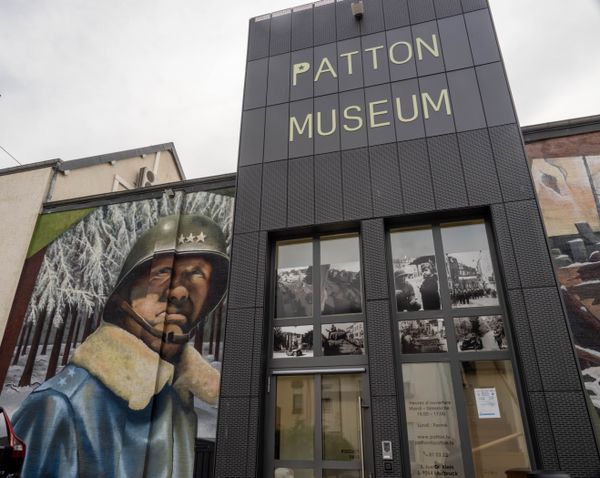
The General Patton Memorial Museum in Ettelbruck commemorates the commander of the 3rd US Army whose troops liberated the town on 25 December 1944. The exhibition illustrates the most important events that occurred during the Second World War in Luxembourg.
Find out more
©Visit Éislek
Museum of the Battle of the Bulge Wiltz
Discover the moving history of the "martyr town" during the Battle of the Bulge in the interactive museum in Wiltz. Experience history up close in the beautiful Wiltz Castle.
Find out more
©Visit Éislek
St. Cunegonde Chapel
The St. Cunegonde Chapel in Heiderscheidergrund, a noteworthy example of 19th-century ecclesiastical historicist architecture in Luxembourg, features a neo-Gothic design, late Gothic sculptures, 18th-century statues, and glass paintings, embodying the country's historical and national consciousness as the oldest Kunigundis shrine.
Find out more
©Industrie.lu
Antimonmine – Abandoned mine
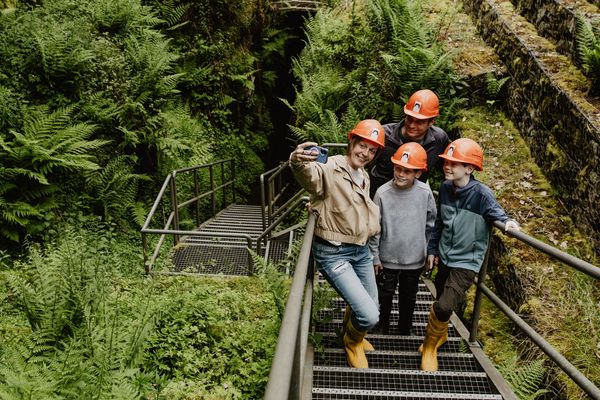
Amidst the tranquil landscape, Goesdorf's geological tapestry reveals remnants of shafts and galleries, preserving the legacy of this "foundry village."
Find out more
©© Giulio Groebert
Esch-sur-Sûre dam
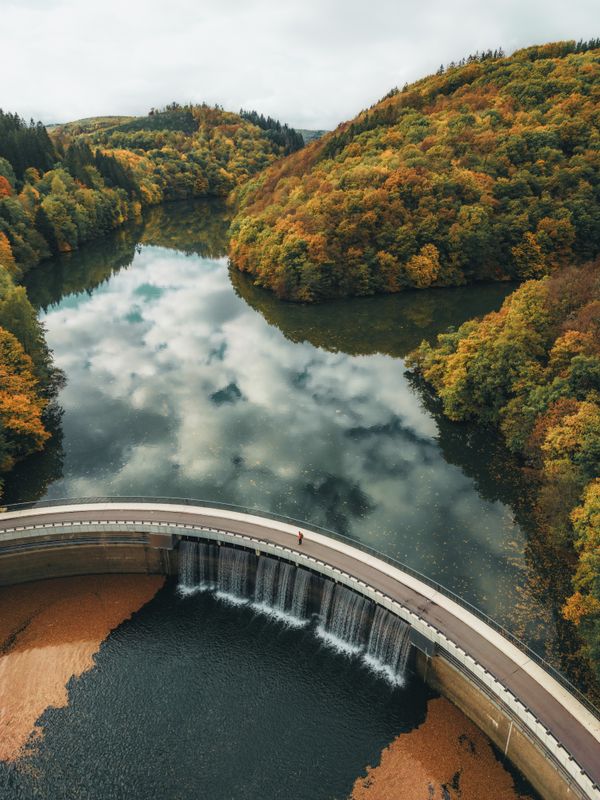
The impressive dam in Esch-Sauer was built between 1955 and 1958 and blends harmoniously into nature. Its arched design makes it a popular photo spot for photographers and nature enthusiasts.
Find out more
©Visit Éislek
St. Pierre Chapel
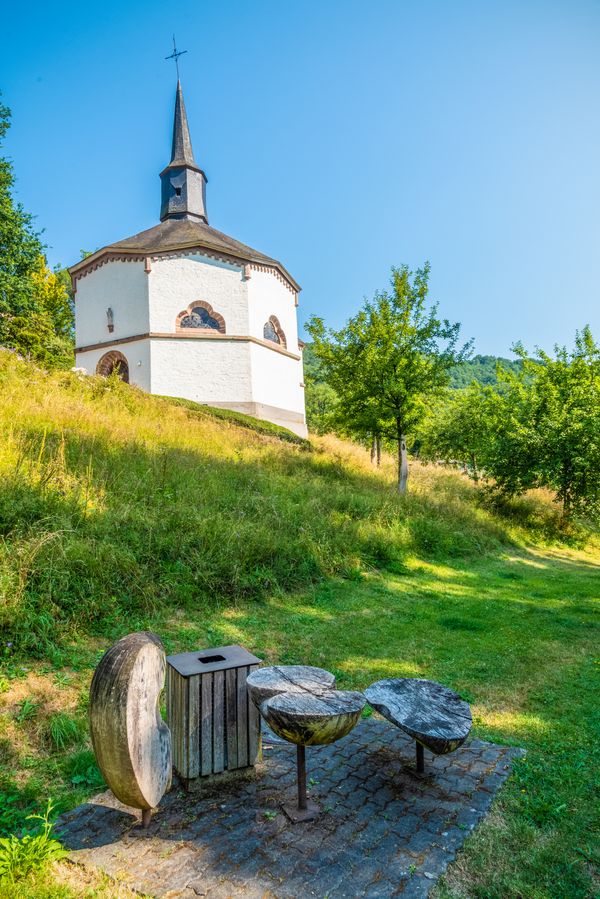
The chapel in Lellingen is an octagonal masterpiece that combines history and architecture in unique harmony.
Find out more
©Visit Éislek
Kalborn Mill
The mill in Kalborn, which is over 200 years old, has developed into a nature conservation centre. Endangered river pearl and brook mussels are bred here. Information boards in front of the mill show how gardens can provide habitats for wildlife and insects.
Find out more
©Visit Éislek
St. Lawrence Church Diekirch
The Laurentius Church in Diekirch was planned by Pierre Biwer and completed in 1868. It was declared a national monument in 2017.
Find out more
©Visit Éislek
Deiwelselter
This remarkable monument, once a burial site, is a landmark of the town of Diekirch. Those who hike there are rewarded by a great view of the village and its green surroundings.
Find out more